
Phonics support that makes reading feel possible
When sounds begin to join up into words, reading starts to make sense. We help children practise those small steps with a tutor who has time to listen, explain and try again alongside them.
Ask about phonics support- Sounds and blending
- Reading confidence
- Free primary assessment
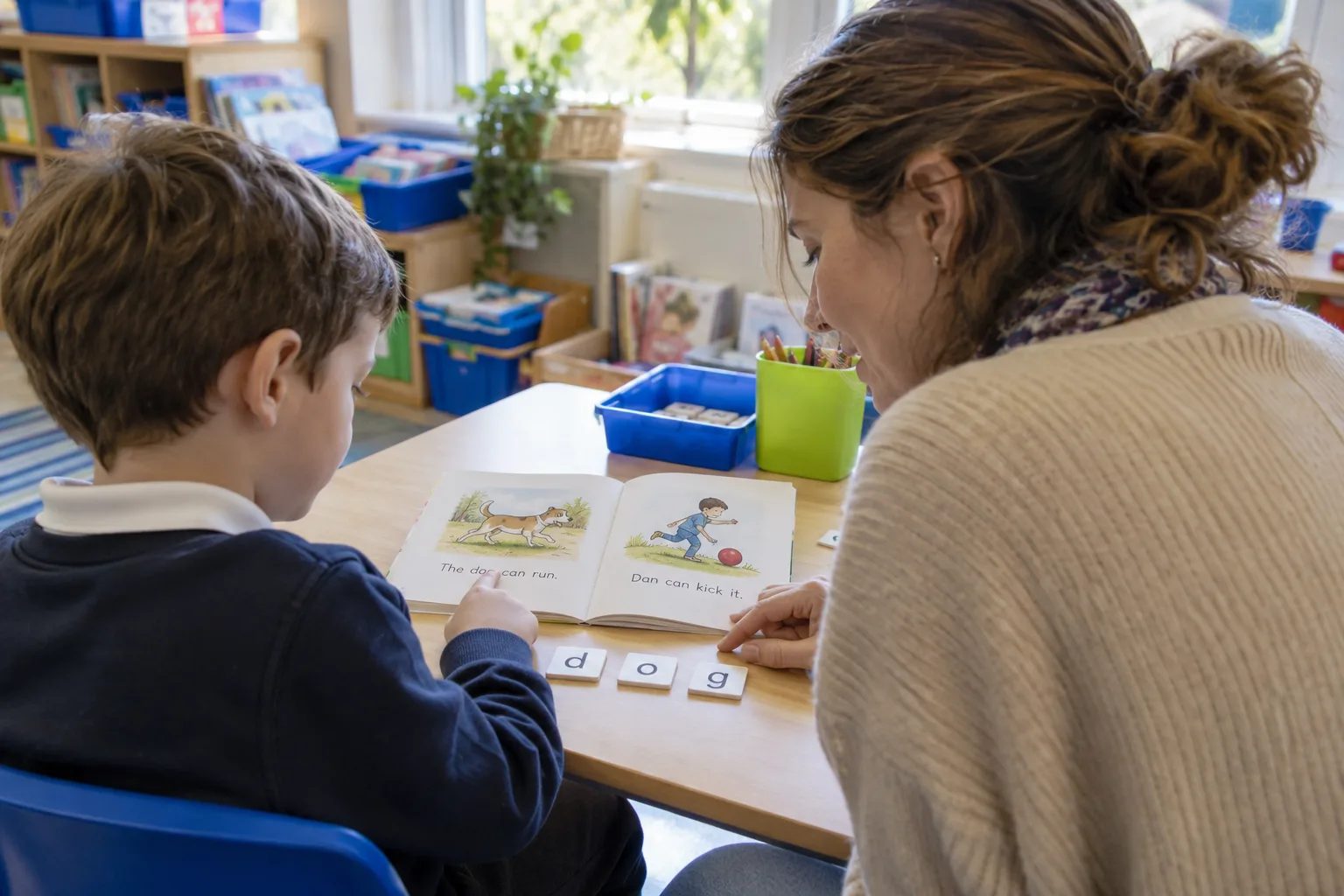
What does your child find tricky?
Children can find different parts of early reading difficult. One child may recognise letters but struggle to hear the word when the sounds are put together. Another might read a familiar word from memory, then find it hard to tackle an unfamiliar one. Knowing which step needs attention is more helpful than simply asking them to read more pages.
Our primary assessment gives us a chance to listen to your child and explore how they approach words. We also ask what they are learning at school and what happens when you read together at home. You can tell us about their successes as well as their frustrations.
We use that starting point to recommend suitable support. The aim is to give children a method they can practise, rather than encourage guessing from a picture or the first letter. There is time to revisit an explanation and recognise the things they can already do.
From individual sounds to a whole word
Phonics links the sounds in spoken language with the letters that represent them. In a session, children may practise recognising a sound, saying it clearly and then blending a short sequence of sounds into a word. Some sounds use more than one letter, so there is more to learn than the alphabet on its own.
A tutor can break the task down and adjust the amount of new material. For example, a child might first practise a small set of familiar sounds, then use them in a few words before reading a short sentence. Moving between these activities helps us see whether a skill is becoming more secure.
We also leave room to enjoy books. Talking about a character or listening to a story supports a child's interest in reading while they are still developing the skills to read the text independently. Enjoyment and practice can sit alongside each other.
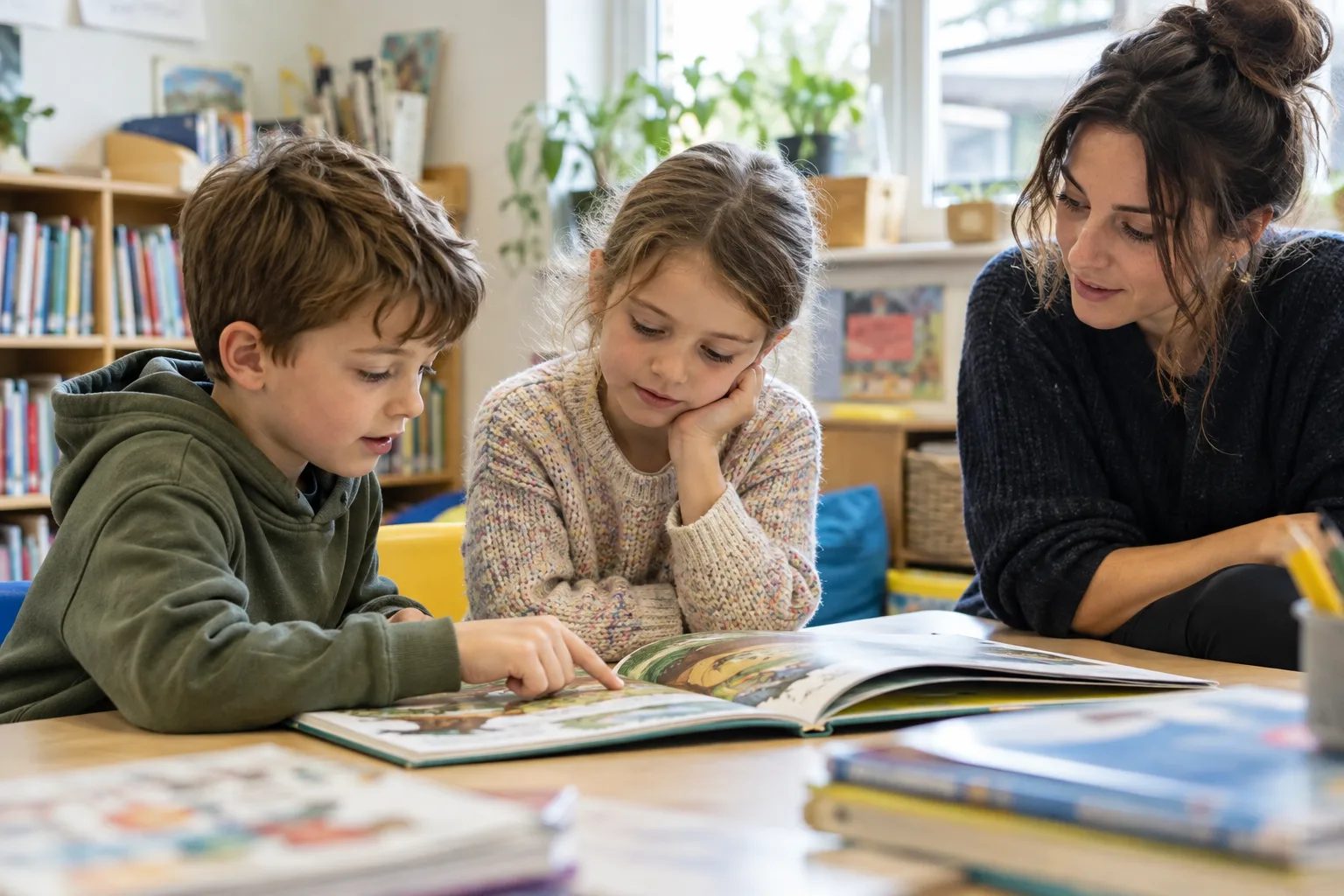
Preparing for the phonics screening check
The phonics screening check looks at how children use their phonic knowledge to read words. Preparation should build that knowledge and make the task familiar. Repeating a particular list without understanding the sounds is less useful when a child meets a word they have not seen before.
We can help children practise applying their sounds to both familiar and unfamiliar letter combinations. This includes explaining that some practice words are made up, so the child is not searching for a meaning or trying to replace them with a real word they recognise.
Your child's school manages the screening arrangements and can explain its own approach. Tell the tutor about any feedback you have received, including sounds or blending skills the school has identified for practice. Tuition should help a child build a usable reading skill, with screening preparation forming part of that work.
Little moments of practice at home
A short, calm reading opportunity can be easier to manage than a long session after a tiring school day. Ask us which sounds or words would be useful to revisit. Practising something specific makes it easier to notice progress and to stop before your child becomes frustrated.
Give your child time to try. If they get stuck, return to the sounds and model the next step without turning the whole page into a test. It is also fine to read to them: hearing you tell a story keeps books part of everyday life while their independent reading develops.
Let us know if home practice regularly ends in tears or refusal. That is useful information, not a sign that you should simply push harder. We can talk about the task, the level of difficulty and whether a different way of practising would be more manageable.
- Ask which sounds are the current focus.
- Keep practice brief and give time to think.
- Share stories as well as practising words.
- Tell the tutor what you notice between sessions.
Support beyond one check
A screening result is one piece of information. We also want to know whether a child can use a sound in a new word, read with less prompting and feel more willing to have a go. These everyday changes help guide what should come next.
If your child needs broader support with comprehension, spelling or writing, we can discuss Maths and English tuition or a different primary session. Our Urmston team will explain the options after the assessment. The starting point is your child's reading, rather than a fixed package that every family must follow.
Your questions, answered.
Can we enquire before the school raises a concern?
Yes. You may have noticed hesitation, guessing or difficulty blending at home. A conversation and free primary assessment can help clarify what would be useful. Bring any school feedback you already have, but you do not need a formal referral to contact us.
Will you use the same phonics approach as school?
Please tell us which programme or terminology your child's school uses. That gives the tutor useful context when planning explanations and practice. We will discuss how to keep support understandable for your child rather than assume every school teaches with identical resources.
Why practise made-up words?
They help show whether a child can use sounds to read an unfamiliar combination of letters, rather than recognise a word from memory. The activity needs a simple explanation first so children understand that the word is not supposed to have a meaning.
Is phonics tuition only for Year 1?
No. Early reading develops at different rates and some children need further practice later. Tell us the child's age and current reading needs. Staff will discuss whether phonics-focused support or a broader English session would be the more useful starting point.
How will we know whether the sessions are helping?
Look for the particular skills being practised: recognising a sound more readily, blending with less help or approaching a new word more confidently. Ask the tutor to explain the current focus and what you can notice at home. Progress is individual, so no screening outcome is guaranteed.
Let's find a useful starting point
Tell us about your child's reading and arrange a free primary assessment in Urmston.