
SATs preparation with room to understand
SATs preparation works best when children understand what they are doing. We help Year 6 pupils strengthen their English and maths, practise applying their skills and approach assessments with a clearer idea of what to expect.
Discuss SATs support- KS2 English and maths
- Steady preparation
- Urmston learning centre

Find the gaps before adding more papers
A practice paper can show that a question was answered incorrectly, but it does not always tell you why. A child might understand the calculation but misread the problem, lose track of the steps or feel rushed. Tuition gives us time to work through the thinking behind an answer.
We start by finding out what your child is comfortable with and where they need support. School feedback, recent work and your own observations can all help. For primary pupils, the free assessment gives us a practical starting point before we recommend sessions.
The plan may include revisiting earlier learning as well as practising Year 6 work. Taking time over fractions or reading vocabulary can be more useful than repeatedly tackling a whole paper that currently feels too difficult. We want preparation to make schoolwork more manageable too.
Making sense of the maths
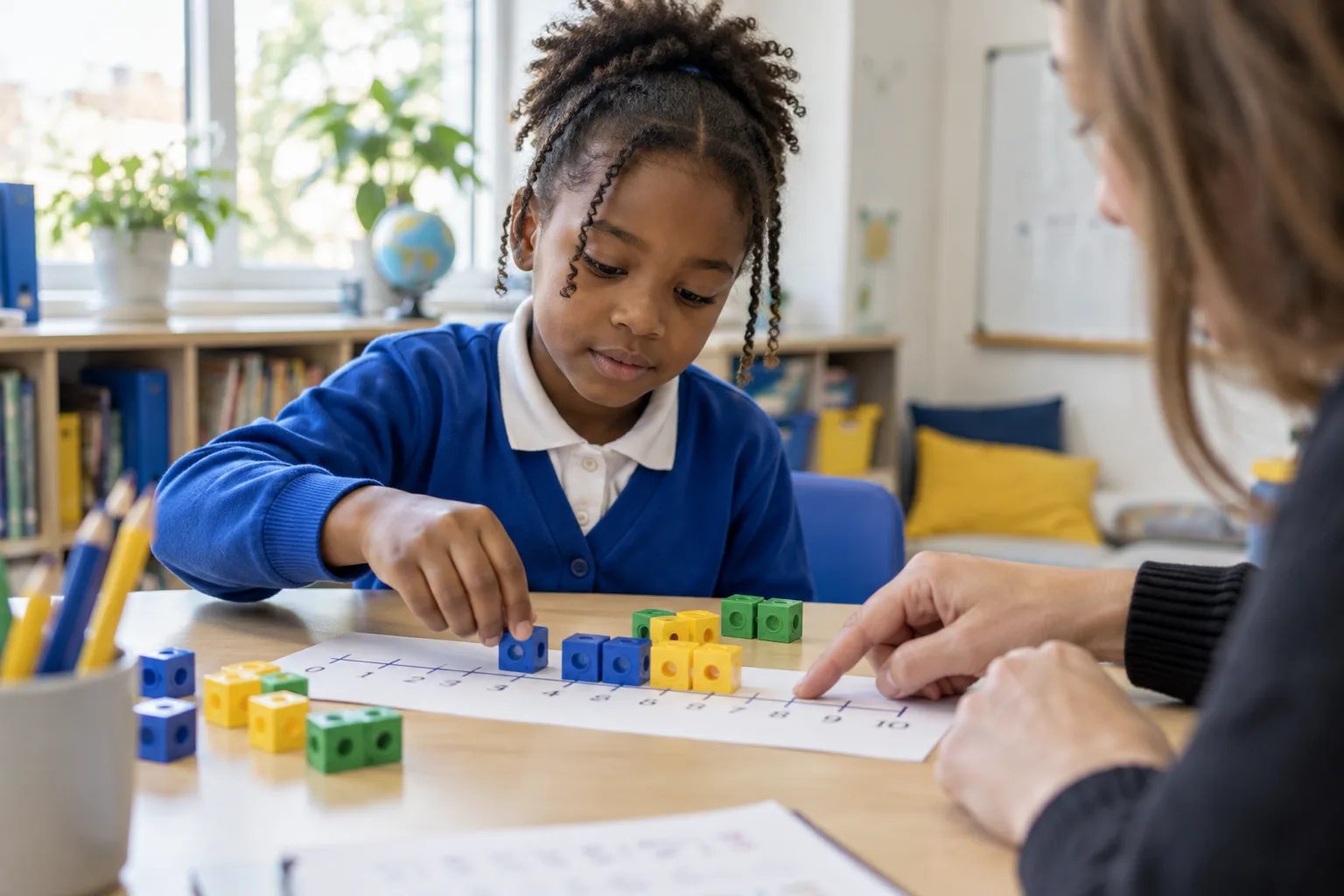
Arithmetic, number facts and written methods provide important foundations. Children also need to decide which method a question calls for and explain or apply their thinking. We help pupils connect the calculation they have practised with the problem in front of them.
A session might focus on one area, such as fractions, measures or place value, and then explore how the same idea appears in different questions. We can slow a question down, identify the useful information and check whether the final answer makes sense.
Working accurately is the first priority when a method is unfamiliar. As understanding becomes more secure, timed practice can help a pupil use their time sensibly. We discuss the balance according to the child, rather than making every activity a race against the clock.
Reading carefully and explaining clearly
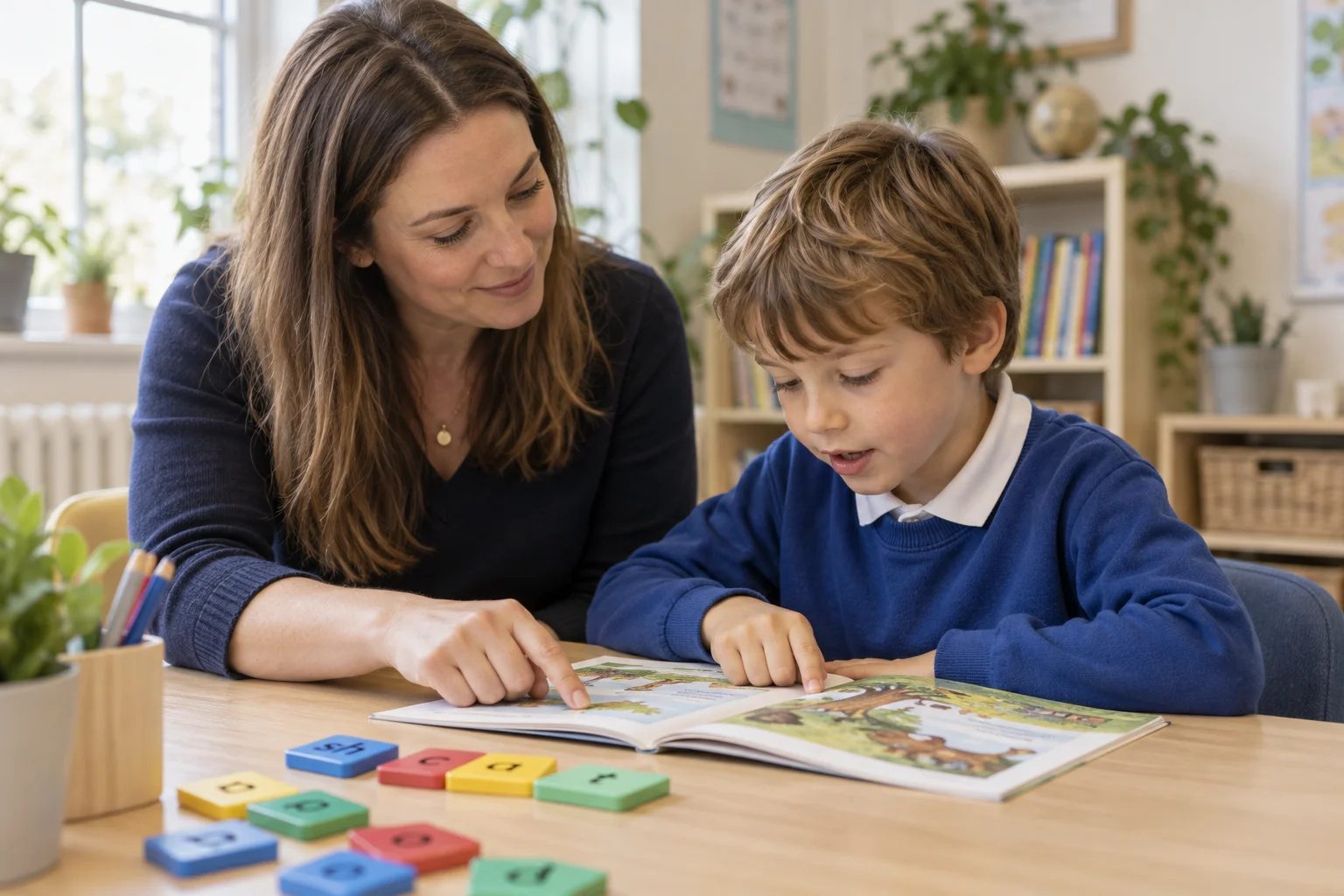
English preparation brings together reading, vocabulary, spelling, punctuation and grammar. A child may be a fluent reader but still need help explaining an inference or finding evidence in a passage. Others benefit from breaking down an unfamiliar sentence before answering a question about it.
We practise looking back at the text, noticing what a question asks and choosing a relevant detail. Talking through an answer before writing it can help children organise their ideas. It also lets the tutor check understanding without assuming a short written response tells the whole story.
Grammar and punctuation are easier to remember when they connect to actual sentences. We revisit the terminology a child needs and practise applying it. Regular reading remains useful alongside these activities because it exposes children to different language, ideas and ways of expressing meaning.
A manageable routine around school
Year 6 already includes a lot of learning and change. Tuition should fit into that picture. We discuss what your child is doing at school, how they feel about assessments and what kind of additional practice is realistic for your family.
General group tuition does not normally come with a separate homework load, although a tutor may suggest a useful activity. If you want work to do between sessions, ask for a specific focus rather than collect several unrelated revision books. A small task that addresses a known gap can be more purposeful.
Closer to an assessment, familiarisation can include reading instructions, checking an answer and moving on from a question that is taking too long. These habits are useful beyond SATs. They help children approach unfamiliar work with a plan and ask for clarification during learning when they need it.
- Choose a small number of useful learning priorities.
- Keep the school workload in mind.
- Review mistakes while there is time to learn from them.
- Make space for rest and interests outside school.
Skills to take into secondary school
SATs are a point in a child's education, rather than the whole purpose of primary learning. Stronger number understanding, thoughtful reading and the confidence to ask a question all matter when pupils move into secondary school.
Our team works with families across Urmston and Trafford, where children follow different secondary routes. SATs preparation is distinct from selective entrance-exam tuition: the aims and question formats are not interchangeable. If you are considering both, tell us so we can discuss sensible priorities and avoid unnecessary duplication.
We will talk honestly about the work your child needs and the time available. No tutor can promise a particular result. What we can do is help identify a starting point, explain difficult ideas and give your child opportunities to practise them with support.
Your questions, answered.
When should we ask about SATs tuition?
Enquire when you notice a need for support, rather than wait for a particular month. Earlier conversations leave more room to build understanding gradually. If the assessments are close, we can discuss the most useful priorities and current session availability without promising to cover everything.
Can you help with maths only?
Yes, tell us which subject or topic is the concern. We will discuss appropriate sessions and whether an assessment would help identify the starting level. Your child does not have to take extra English tuition simply because they need support with maths.
Will every session involve a timed test?
No. Teaching and practice should address the skill a child needs. Timed work can help with familiarisation when appropriate, but repeated tests are not a substitute for explaining a method or understanding a passage. Staff will discuss a suitable approach.
Do SATs sessions prepare children for Trafford grammar entrance tests?
They support some shared English and maths foundations, but the two assessment routes are different. Entrance preparation needs to take account of the target school and intake year. Ask about the Trafford 11+ programme if selective entry is also part of your plans.
What can parents do between sessions?
Ask which particular skill is being practised and share any school feedback. Reading together and discussing a text can be useful without making home feel like another lesson. If your child is becoming worried or overloaded, let both the tutor and school know.
Make a plan for Year 6
A free primary assessment can help us understand what your child needs and suggest a useful next step.